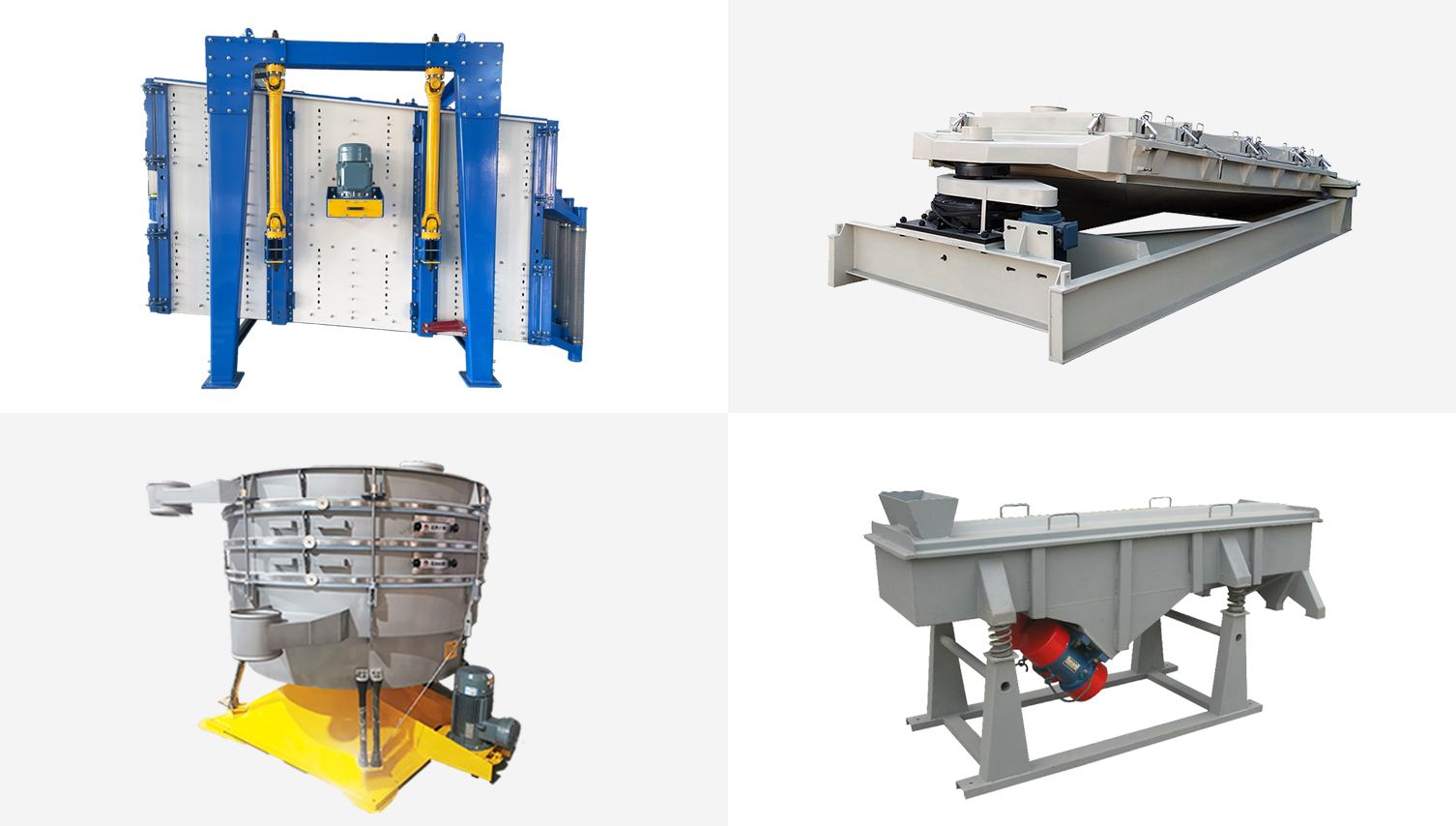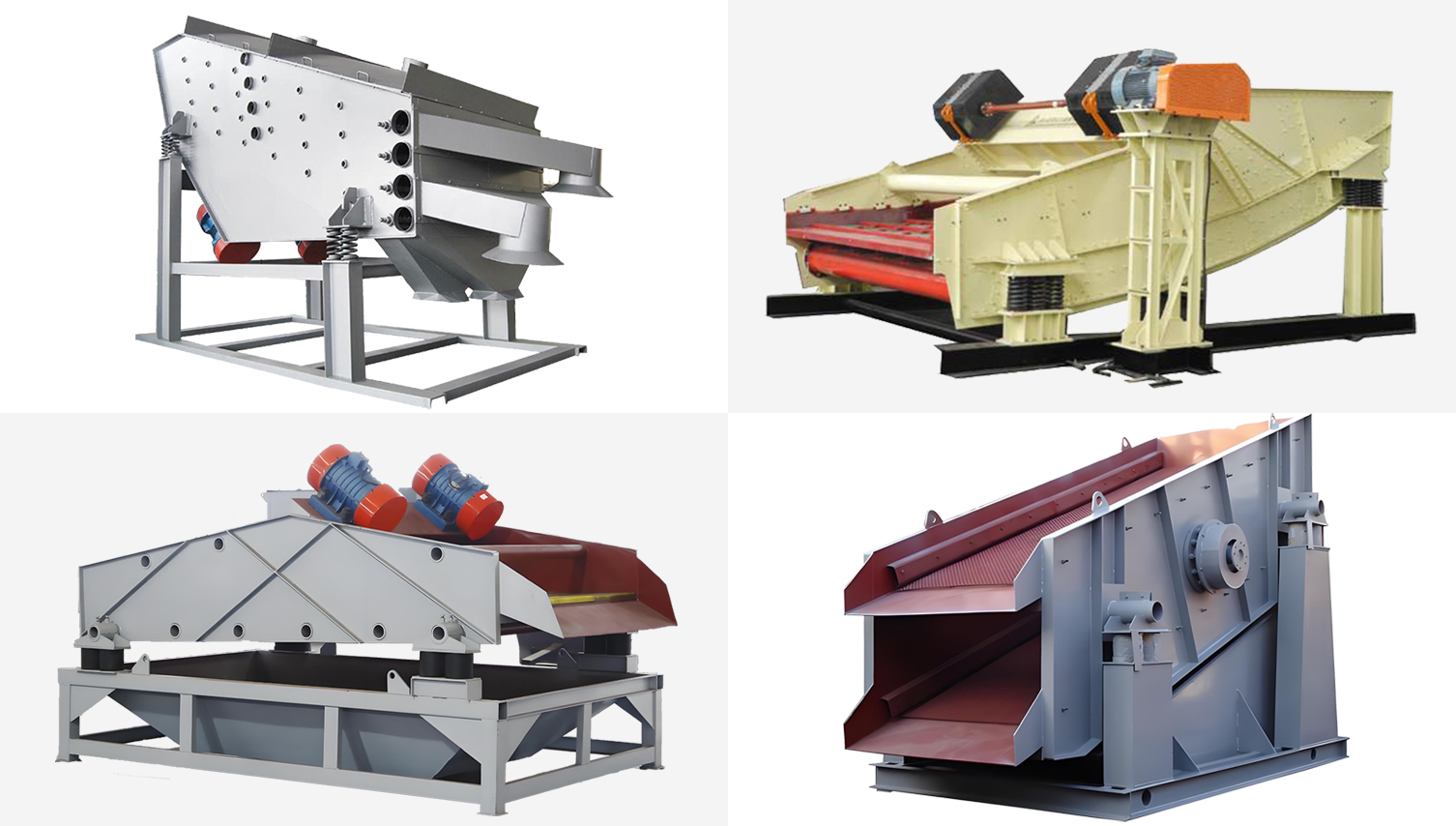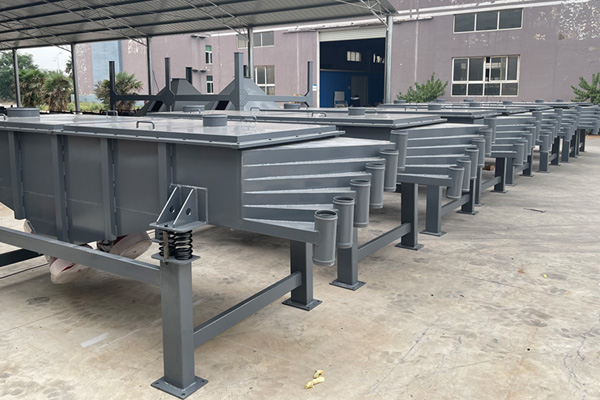
When processing materials with high moisture content, high viscosity, or containing a large amount of fine powder, screen clogging is a major headache for linear vibrating screens. When the material properties cannot be easily changed, upgrading the screen itself is a direct and effective way to solve the clogging problem. Different screen structures and materials vary drastically in their anti-clogging performance.
1. Controlling Material Moisture Content and Surface Moisture
Many materials (such as coal, sand, and mineral powder) have excessively high surface moisture in their natural state or after washing. Fine particles combine with moisture to form a mud-like substance with a certain degree of adhesion, firmly sticking to the screen openings. The solution is to add a drying or sun-drying process before screening to control the material moisture content below the critical point (usually<5%). For wet screening where drying is not possible, consider adding a small amount of dispersant or surfactant at the feed end to disrupt the surface tension of water and reduce the adhesion between the material and the screen.
2. Properly Adjust Feed Rate and Speed
Excessive instantaneous feed rate creates an overly thick material layer on the screen surface, significantly increasing the pressure between the lower material and the screen surface. This causes fine particles to be "pressed" into the screen holes or stuck to the hole walls. The correct approach is to use a uniform, thin-layer feeding method. By adjusting the feed gate or vibrating feeder, the material is spread into a "single-particle layer" or a thin layer on the screen surface, allowing each particle to contact the screen surface and pass through promptly, thus reducing the chance of clogging.
3. Precisely Match Amplitude and Frequency
The design of the excitation force parameters of the linear vibrating screen is crucial for preventing clogging. Amplitude determines the height the material is thrown, and frequency determines the number of throws. For materials prone to clogging, the vibration amplitude should be appropriately increased (e.g., 6-8 mm) to give the material more kinetic energy to bounce off the screen surface, preventing it from "getting stuck" in the screen holes; at the same time, the vibration frequency should be slightly reduced to give the particles enough time to fall and pass through the screen after being thrown up. This requires on-site testing based on the material characteristics to find the optimal matching point. To solve the problem of clogging in linear vibrating screens, the focus should not be solely on the screen itself, but rather on the "source" properties of the material. By strictly controlling the moisture content of the feed, optimizing the uniform feeding speed of the thin material layer, and adjusting the amplitude and frequency parameters according to local conditions, the adhesion of material to the screen surface and the probability of clogging can be fundamentally reduced. This "prevention first, treatment later" strategy, while perhaps not as quick as direct tapping, is the most durable and economical solution, significantly reducing the labor intensity of subsequent screen cleaning.
Clearly separated particles, intelligent screening – Mirant Xinxiang Machinery Equipment Co., Ltd.