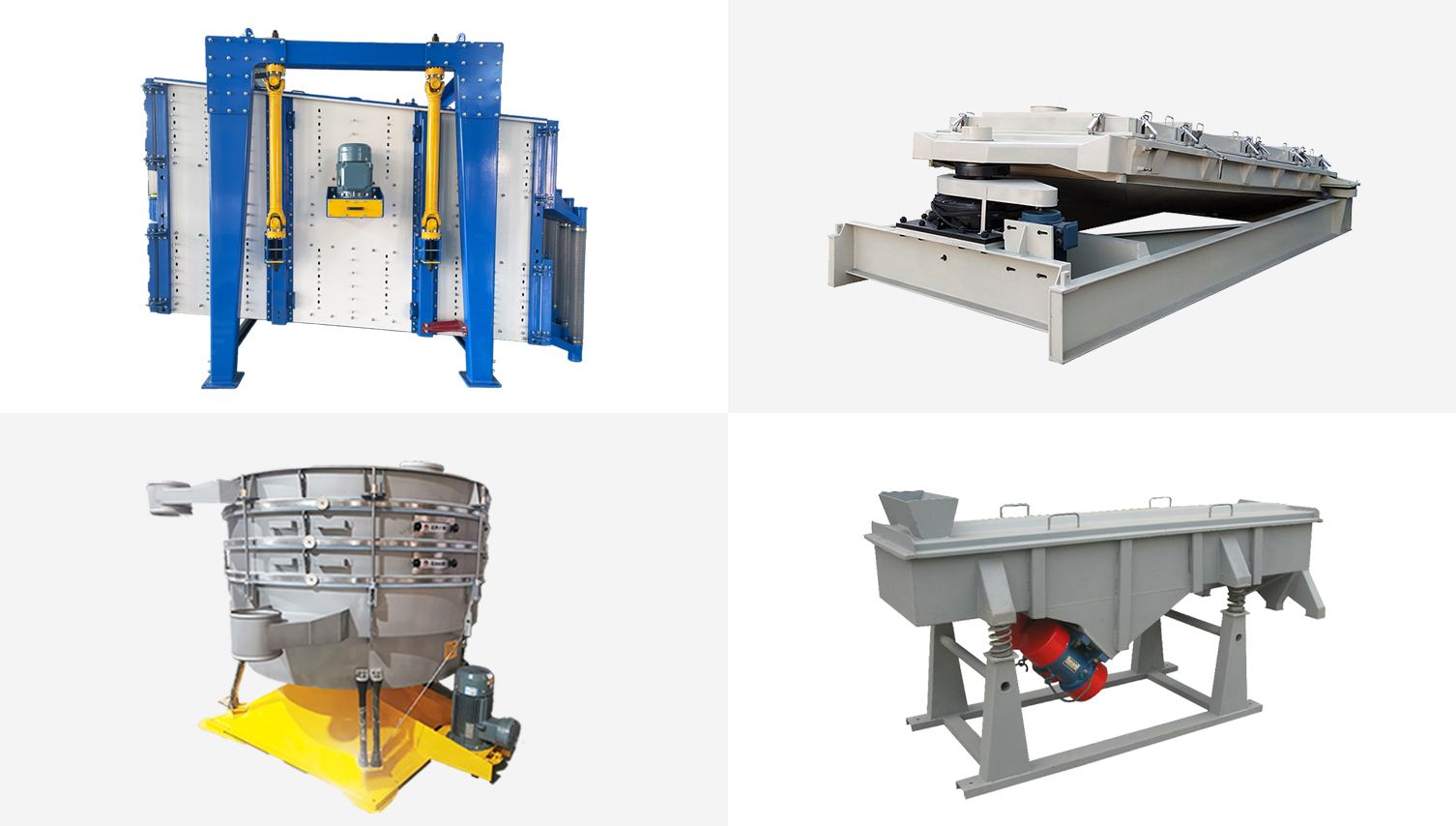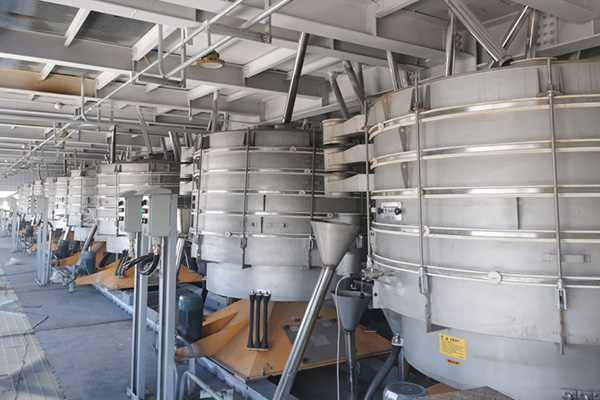
Features and Principles of Circular tumbler Screens
Circular tumbler screens are currently recognized in the fine screening industry as "high-output, high-precision" equipment.
Features: Anti-clogging design, quiet operation, minimal damage to the original structure of materials.
Principle: Simulates the principle of manual screening; rotational speed, radial force, and tangential force are all quantitatively adjustable. This allows it to process large quantities of materials while ensuring screening purity.
Management Attribution of Screen Wear
In many factories, rapid screen wear is not a equipment problem, but rather an operational error. For example: starting under no-load causes screen vibration and friction; inconsistent feed rates cause uneven screen load; failure to clean after shutdown leads to material agglomeration and hardening, cutting the screen.
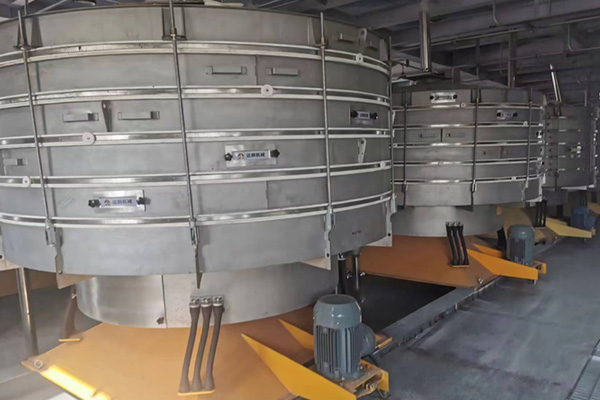
Solution: Standardized Operating Procedures
1. Implement the "Start-Stop with Material" Rule:
- Strictly Prohibited: Starting the gyratory screen under no-load conditions and then allowing it to idle for extended periods without material. Without material buffer, the screen will directly rub against the screen frame and bouncing balls, resulting in rapid wear.
- Standard: Start the machine first, then immediately begin feeding within 5 seconds; before stopping, stop feeding first, and only stop the machine when a thin layer of material (approximately 1-2 mm) remains on the screen surface. This "protective film" prevents the screen from rebounding and slapping upon shutdown.
2. Control the "Uniformity" and "Continuity" of Feeding:
- Use a screw feeder or star-shaped feeder valve to ensure that the material enters the screen surface tangentially, rather than falling vertically.
- The feed rate should be controlled to approximately 80% of the maximum allowable throughput of the screen mesh. Overloading will cause the screen to sag and deform, resulting in cutting and wear between the screen and the screen frame edges.
3. Establish a "grid-based" inspection and fine-tuning system:
- Weekly: Check screen tension. Use a tension meter to measure; if slack exceeds 5%, immediately fine-tune the tension ring.
- After each screen change: Perform a 2-hour "break-in" period. During this period, control the feed rate at 60% of normal to allow the screen to fully adapt to the oscillating stress.
- Visual inspection: Regularly observe whether the material vortex on the screen surface is symmetrical. If it is biased to one side, it indicates that the equipment is not properly leveled. At this time, one side of the screen will wear extremely quickly, and the equipment feet must be adjusted immediately.
4. Material pretreatment:
- Before entering the oscillating screen, use a magnetic separator to remove iron filings from the material and use an air classifier to remove light fibers. These impurities act like "blades" on the screen surface, rapidly cutting the screen.
Even the most advanced equipment cannot fully realize its advantages without scientific management and operation. The screen wear problem of a circular oscillating screen ultimately tests the user's level of refined management. By establishing the ironclad rule of "start-stop with material," implementing a uniform and stable feeding strategy, conducting regular grid-based inspections, and rigorous material pretreatment, we can completely eliminate the source of rapid wear from human factors. When operators develop the habit of caring for the screen, the circular gyratory screen can truly achieve its designed lifespan—not only will the screening gyratory motion be smooth, but its lifespan will also remain robust.
Clearly separated particles, intelligent screening— Mirant Xinxiang Machinery Equipment Co., Ltd.