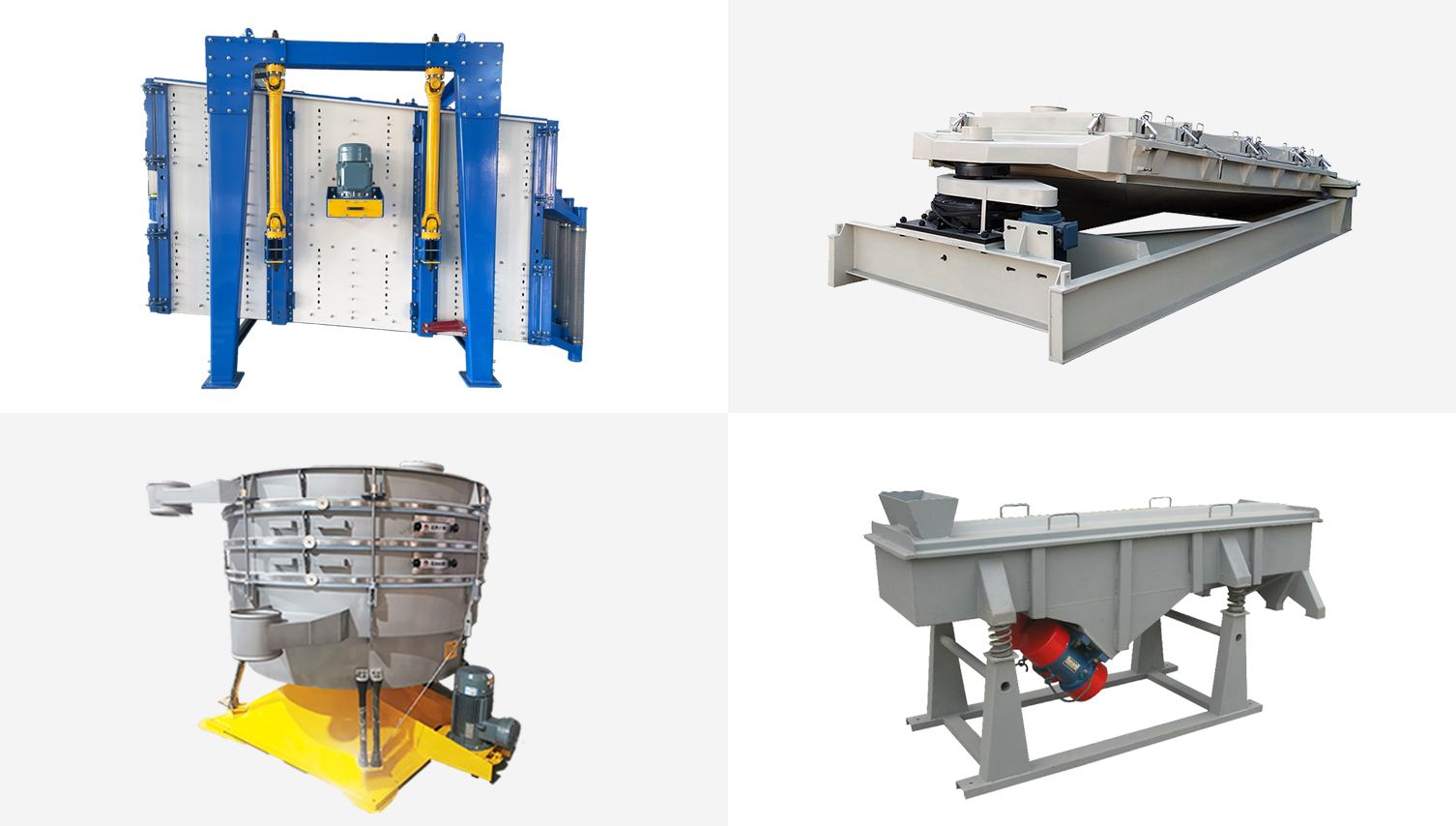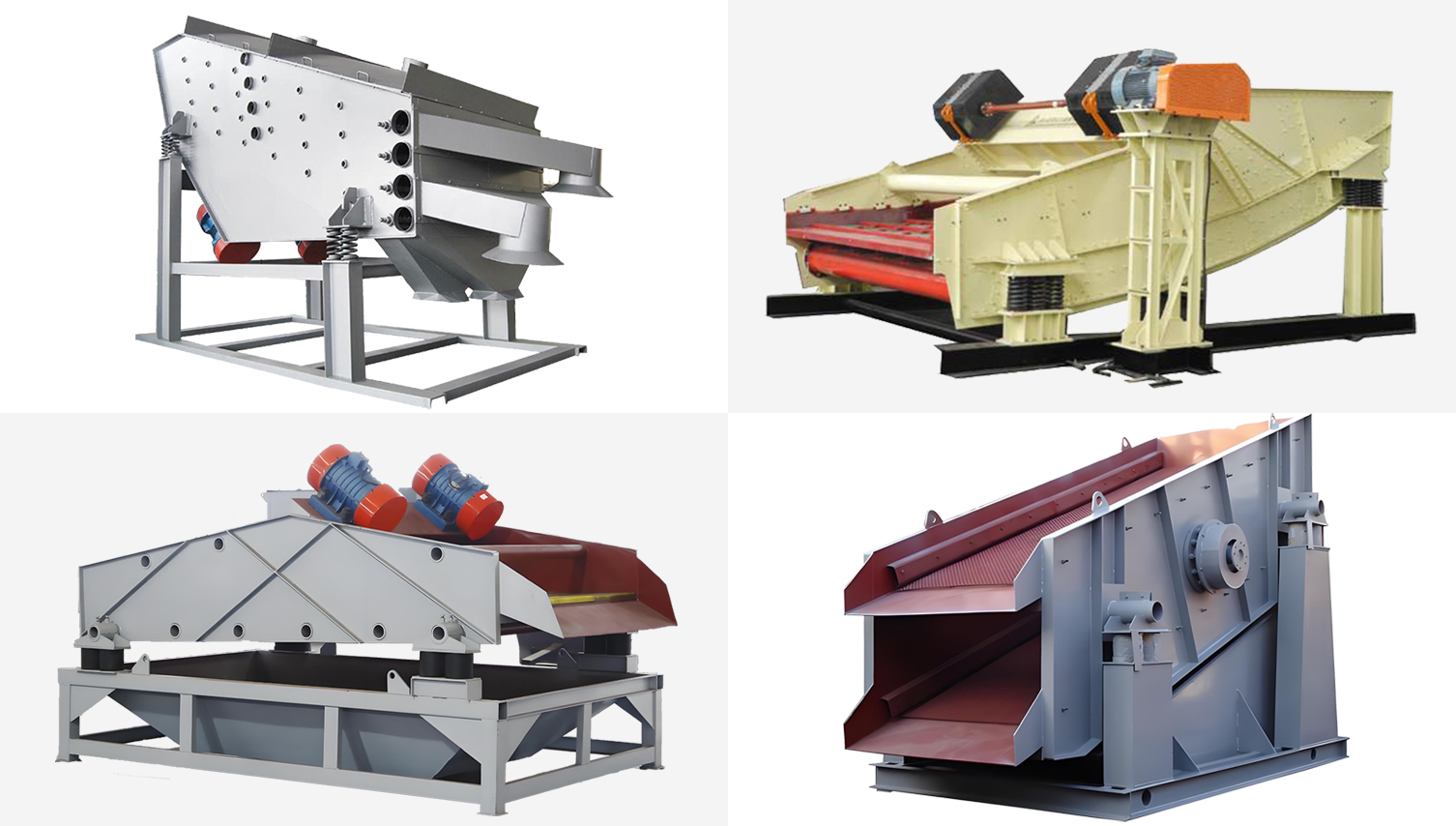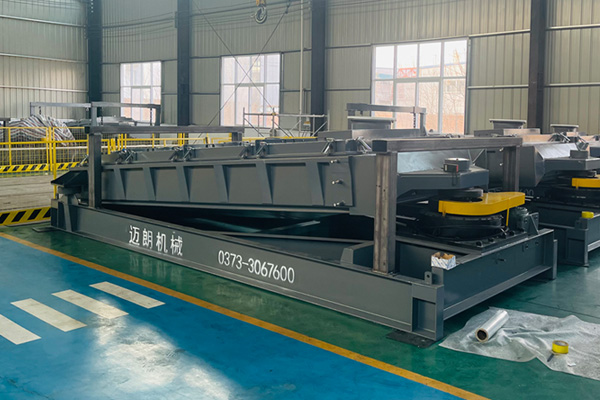
The compound sieve mainly consists of a frame, sieve body (sieve box), transmission mechanism, screen cleaning device and other components. As the supporting skeleton of the whole equipment, the frame is generally fabricated by steel‑plate welding to guarantee sufficient structural strength. The sieve body adopts a fully‑enclosed structure, riveted or welded from steel plates for sealing and dust‑proof performance. The sieve body can be suspended from the frame by four steel wire ropes, or supported by a floor‑standing frame, offering flexible adaptation to different workshop conditions.

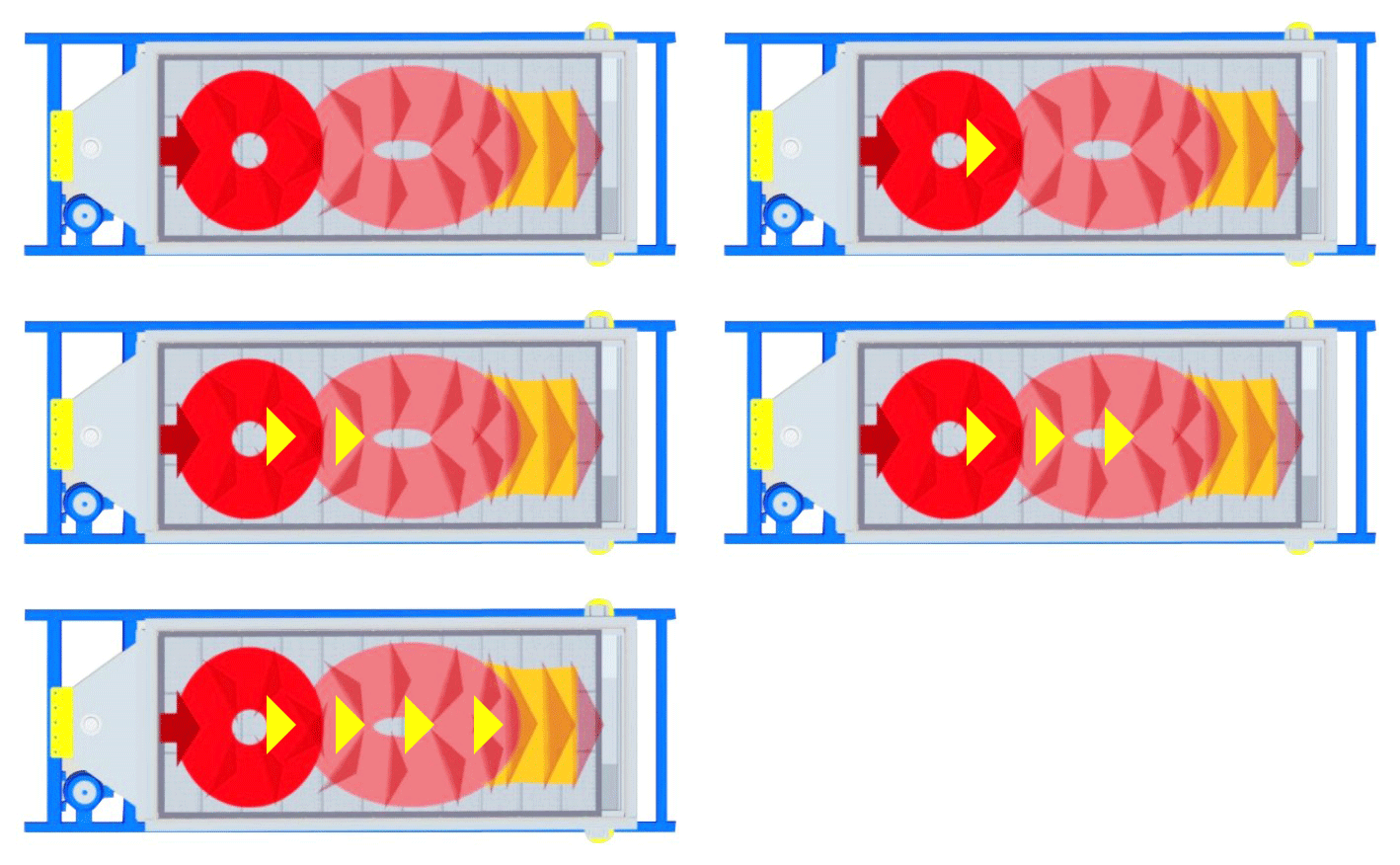
The motion trajectory of the compound sieve presents horizontal circular movement at the feed end, which gradually transitions into elliptical movement, and finally turns into approximate reciprocating linear movement at the discharge end. Thanks to this three‑section motion design, the equipment achieves three major functions simultaneously: uniform material distribution, fine classification and fast discharging. Whether handling light‑weight materials such as food grains or heavy‑weight materials like ore particles, the compound sieve can be adapted by adjusting parameters including amplitude, rotating speed and sieve‑deck inclination angle.
Many enterprises feel confused when selecting screening equipment due to numerous brands, mixed models and disordered parameters. In fact, model selection for the compound sieve is not as complicated as imagined. Demands can be precisely matched by focusing on four core parameters.
First parameter: Throughput capacityThroughput capacity directly determines the equipment model size, normally measured in tons per hour (t/h). It shall be defined in combination with the overall production‑line capacity, with 10%‑20% redundancy reserved to avoid full‑load operation. It should be noted that throughput is affected by material particle size: for the same model, throughput may differ by up to 30% when screening materials of different particle sizes. Therefore, manufacturers must be informed of the actual particle‑size range of materials during selection.
Second parameter: Sieve aperture sizeSieve aperture size determines screening accuracy and classification performance. For impurity removal (e.g. removing stones and contaminants from grains), the aperture shall be slightly smaller than the particle size of target materials. For classification (i.e. separating materials into multiple particle‑size fractions), multi‑layer screens are required with progressively decreasing aperture sizes from top to bottom. A common misconception here: higher throughput does not always come with larger apertures. Excessively large apertures will cause qualified materials to be discharged together with impurities, which instead increases material loss.
Third parameter: Material characteristicsMaterial properties including moisture content, stickiness and density exert direct impacts on screening efficiency. High‑moisture materials tend to agglomerate and block screen apertures; hence models equipped with anti‑blinding screens or vibratory cleaning devices are preferred. For sticky materials, the sieve‑deck inclination angle needs to be increased to facilitate material advancement. High‑density materials require heavier‑gauge screens and more powerful motors.
Fourth parameter: Installation spaceCompound sieves have two primary installation types: base‑mounted and suspension‑mounted. The base‑mounted type suits workshops with sufficient floor space and features simple installation. The suspension‑mounted version fits scenarios with adequate floor height yet limited floor area, consuming no ground footprint. Besides, the positions of feed and discharge ports shall allow smooth connection with production‑line conveyors or pipelines.
Admittedly, the initial procurement cost of a compound sieve is higher than that of an ordinary vibrating sieve. Nevertheless, this investment is usually worthwhile when considering the full‑life‑cycle cost.
Savings on screen costs: Its screen service life is 2‑3 times that of ordinary vibrating sieves, cutting screen replacement frequency by more than half. For enterprises with large‑scale continuous production, annual savings on screen procurement are considerable.
Savings on energy‑consumption costs: For equal throughput, the planar gyratory sieve runs with lower motor power. With rising electricity prices, energy‑consumption gaps over long‑term operation cannot be overlooked.
Savings on maintenance costs: Stable operation brings low wear; its maintenance frequency and related expenses are lower than those of conventional vibrating sieves. New equipment is covered by the manufacturer’s warranty, further mitigating early‑stage operational risks.
Reduced downtime losses: High equipment stability and low failure rate greatly cut unplanned shutdown hours. For enterprises pursuing continuous production, reduced downtime itself generates substantial implicit benefits.
Improved product quality: Superior screening accuracy delivers stable product quality, fewer customer complaints and higher brand premium. Such indirect benefits often far outweigh the price gap of the equipment itself.
Purchasing industrial equipment is essentially a trade‑off centered on value. At a higher upfront price, the compound sieve delivers longer service life, lower operating costs, better product quality and more reassuring operation experience. It is not simply a question of “whether it is expensive”, but “whether it is worth it”. For entrepreneurs who truly understand the business logic that “good equipment acts as a money‑making machine”, the compound sieve is more than screening machinery; it serves as a production tool that continuously creates value.
Distinct particles, intelligent screening
Mirant Xinxiang Machinery Co., Ltd.