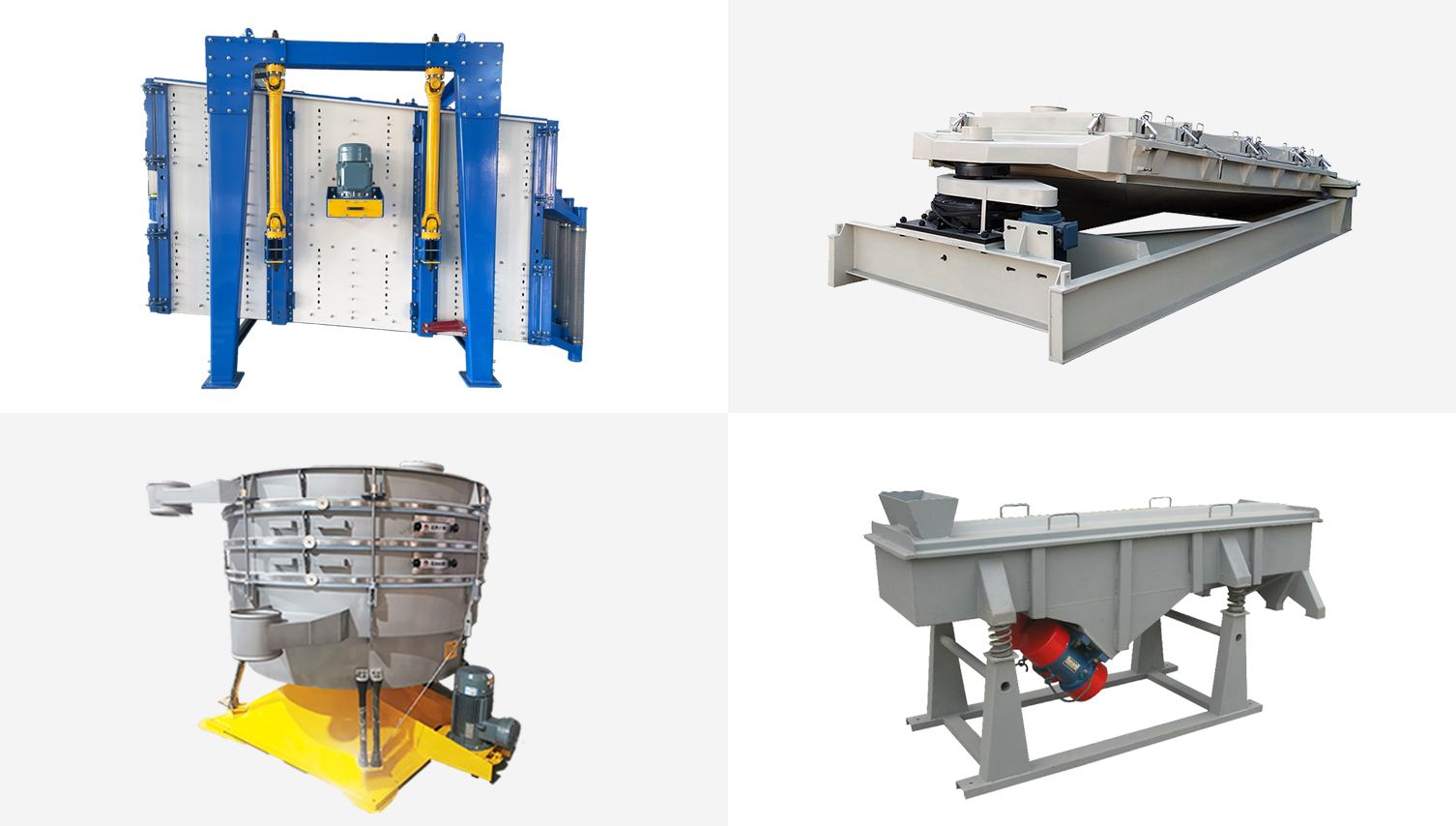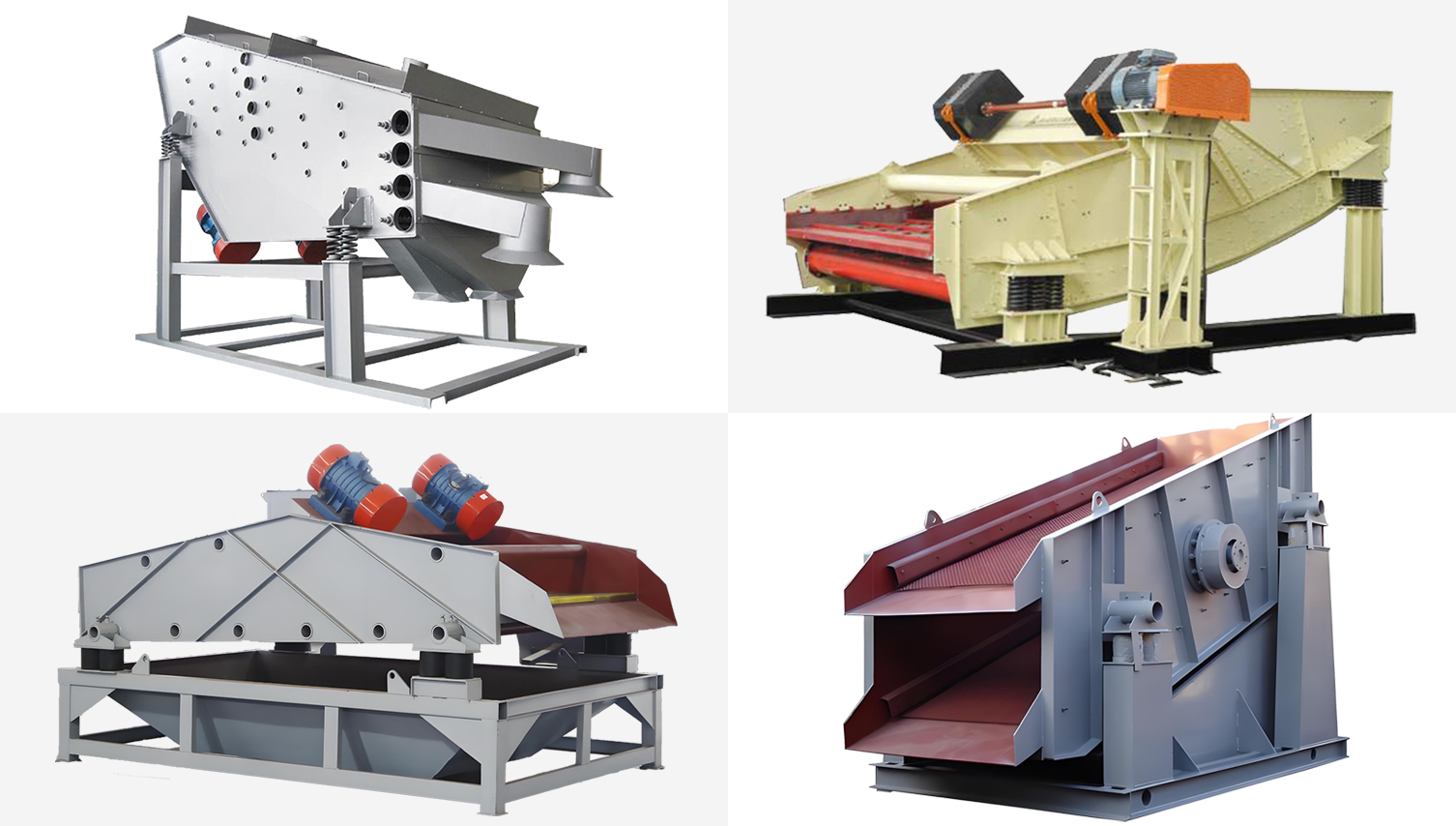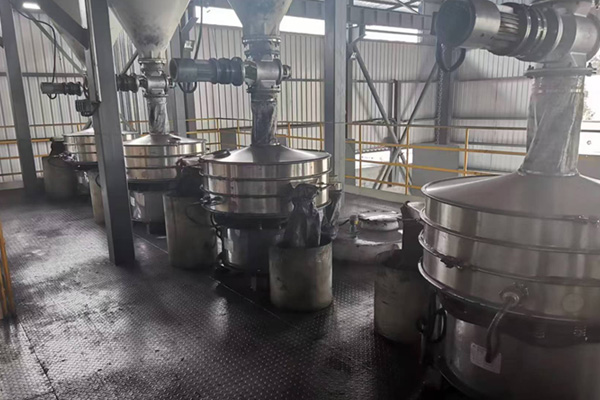
In actual production, the screening effect of vibrating screens is affected by a combination of factors. Even with a well-designed vibrating screen, its final screening efficiency, accuracy, and throughput are not constant. Today, we will discuss these key factors and propose corresponding optimization strategies to help users achieve optimal production efficiency. Operators need to act like a "tuner," finely adjusting the following core parameters according to material characteristics and process requirements.
I. Material Characteristics
1. Particle Size Distribution: The higher the content of "difficult-to-screen particles" (particles with a diameter close to the screen aperture size) in the material, the lower the screening efficiency, and the more prone it is to screen clogging.
2. Moisture and Oil Content: When the material has excessive moisture or oil content, adhesion and agglomeration are likely to occur, severely deteriorating the screening process. Drying pretreatment or special configurations such as ultrasonic screen cleaning should be considered.
3. Particle Shape: Flaky and needle-shaped particles are more difficult to screen than spherical particles.
4. Bulk density and coefficient of friction: These affect the flow velocity and diffusion capacity of materials on the screen surface.
II. Equipment Process Parameters
1. Vibration Parameter Adjustment:
- Amplitude: Changed by adjusting the angle of the eccentric weights on the motor. Larger amplitude is suitable for large particles and high throughput; smaller amplitude is beneficial for fine screening and brittle materials.
- Vibration frequency: Usually determined by the motor speed. High frequency is beneficial for fine powder screening and preventing screen clogging.
- Vibration direction angle: Adjusting the relative angle of the upper and lower weights can change the balance between material diffusion and conveying speed on the screen surface.
2. Screen Surface Parameters:
- Screen mesh size and aperture: This is the most direct factor determining the grading point. It needs to be selected reasonably according to the target particle size, and the influence of wire diameter on the effective screening area should be considered.
- Screen area and open area ratio: The larger the effective screening area, the higher the processing capacity. A taut and flat screen is the foundation for ensuring screening accuracy.
- Screen Inclination Angle: Most vibrating screens are installed horizontally, but some models allow for fine-tuning of the inclination angle to change the material residence time.
3. Operating Conditions:
- Feeding Method and Feed Rate: Uniform and continuous feeding is a prerequisite for stable screening. Excessive feed rate will form a thick material layer, leading to incomplete screening; insufficient feed rate will result in low equipment utilization.
- Screening Time: The material needs sufficient residence time on the screen surface to complete screening. This is indirectly controlled by adjusting the discharge guide plate or the equipment running time.
Optimization Strategy Suggestions:
- "Targeted Solutions": Thoroughly understand the material characteristics before screening. For issues such as viscosity, static electricity, and easy agglomeration, consider using a bouncing ball, ultrasonic, or airflow-assisted screen cleaning system.
- "Gradual Approach": Run the machine unloaded before starting, then slowly and uniformly feed the material. When adjusting parameters, change only one variable at a time and observe the effect.
- "Regular Maintenance": Regularly check the screen for looseness or damage, and promptly clean any blockages to ensure the equipment is always in optimal working condition. Excellent screening results are the result of a perfect match between material characteristics, equipment status, and process parameters. Understanding the influencing factors of these key elements and implementing dynamic optimization is crucial for improving production efficiency and product quality.
Clearly separated particles, intelligent screening – Mirant Xinxiang Machinery