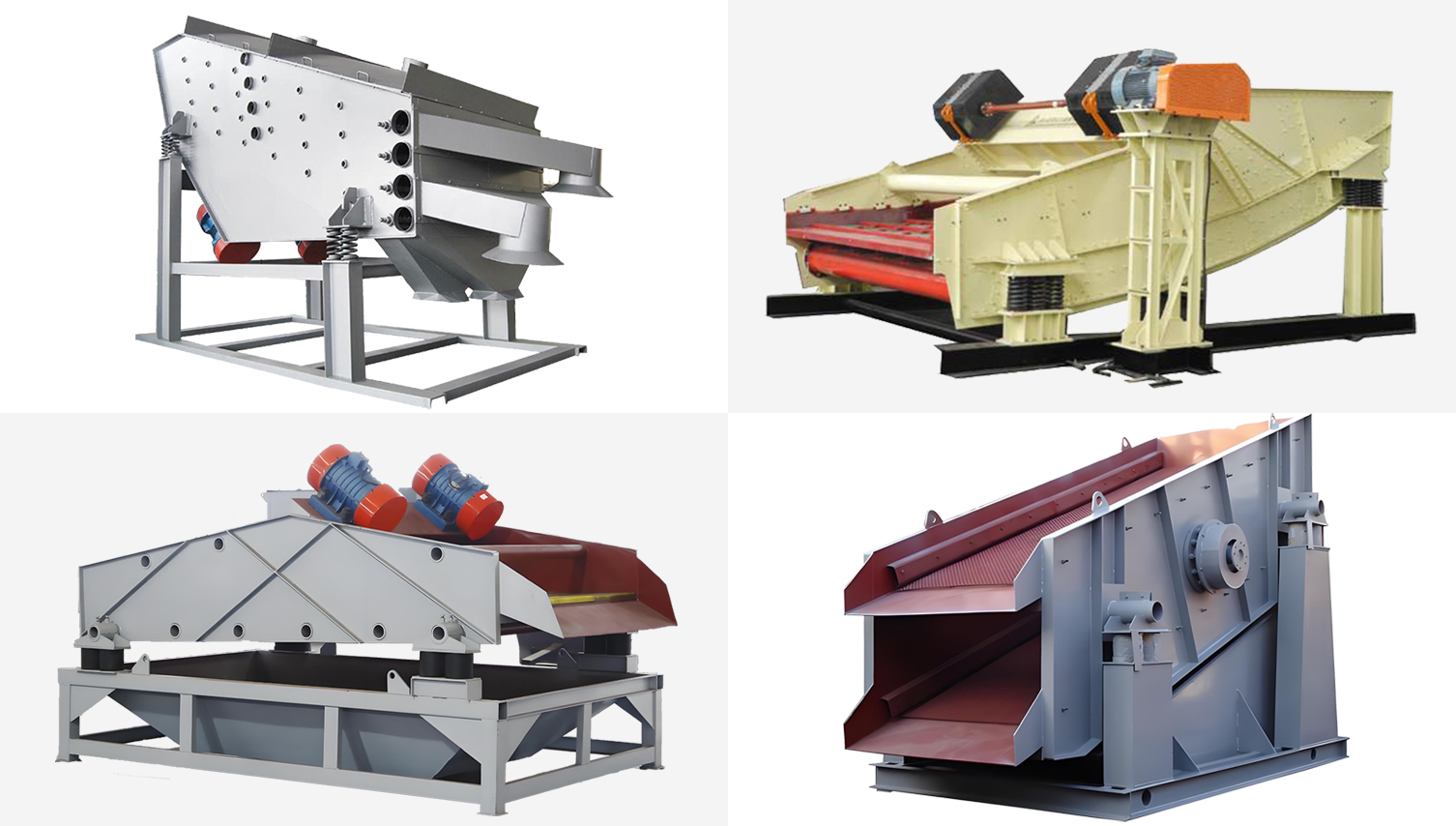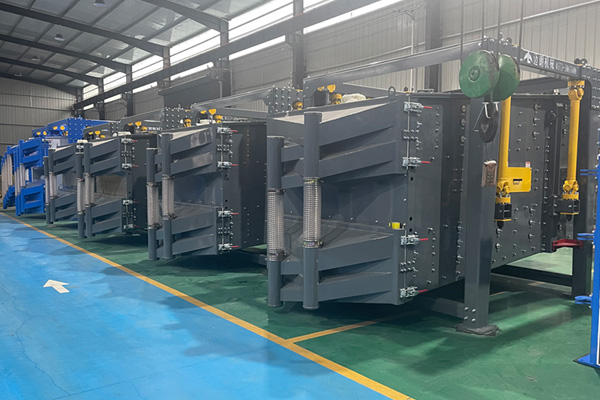
Last year, a company was procuring equipment. The purchasing manager, holding price quotes from three suppliers for square gyratory screens, proudly announced at a meeting, "We'll choose the cheapest one; that'll save us over ten thousand yuan!" However, three months after the equipment arrived, the finance department recalculated the costs and discovered that the "saved" amount had been swallowed up by various hidden expenses, resulting in a net loss. This story teaches us that when choosing screening equipment, we can't just look at the purchase price; we must consider the total lifecycle cost. Today, I want to help you calculate this "hidden cost" from the user's perspective.
Account 1: Efficiency Account – Don't Let Screens Become "Intestinal Obstructions" in the Production Line
The old screening equipment had a nominally high processing capacity, but in actual operation, even slight fluctuations in the incoming material would cause material to accumulate on the screen surface. What does material accumulation mean? It means the packaging machine behind it is idling, the dryer in front is reducing production, and the entire line is being dragged down to "half-speed operation" by this screen.
After replacing it with a square gyratory screen, we found its design philosophy was different: it incorporated "error tolerance."
Its feed inlet features a well-designed material distribution device that ensures even material distribution and prevents localized accumulation; its screen tensioning structure is sophisticated, guaranteeing effective operation across the entire screen surface; and its transmission system has sufficient reserve capacity, allowing it to withstand sudden increases in feed volume without immediately breaking down.
This combination of features finally enabled my production line to operate stably at full capacity. The increased production capacity, converted into profit each month, far exceeded the price difference of the equipment itself.
Ledger 2: Maintenance Costs – How much is lost in one hour of downtime?
The losses from equipment failure are often not just the cost of repairing the machine, but also the losses from downtime.
When running older equipment, the worst thing is receiving a call in the middle of the night: "The screen is stuck, the mesh is broken, we have to stop and replace it." Replacing a mesh takes two workers three or four hours, during which time the entire line has to stop. During peak season, this downtime can result in losses of tens of thousands of yuan.
The square gyratory screen has indeed been designed with ease of maintenance in mind:
Screen replacement structure: Its screen uses a drawer-style installation; simply loosen a few bolts and pull it out as a whole for easy replacement on the ground, eliminating the need to crawl under the machine and crane your neck like with older equipment.
Lubrication points: All points requiring regular maintenance are designed in easily accessible locations, allowing for routine maintenance without disassembling the protective cover.
Standardized parts: Screens of different layers, bouncing balls, and sealing strips are all of universal specifications, significantly simplifying spare parts inventory.
After using it for a while, our unplanned downtime has decreased by more than 70%. The workshop director understands this best.
Lesson 3: Quality Considerations—Every 1% improvement in screening accuracy can mean a difference of several percentage points in profit.
The current market competition has entered an era of "low-profit margins." For the same product, if your particle size uniformity is slightly better than your competitors, you can get a higher price; if your powder content is slightly lower, downstream customers will experience less production loss, making them more willing to cooperate long-term.
The superior screening accuracy of a square gyratory screen stems from its adjustable motion trajectory. Depending on the characteristics of different materials, we can adjust the rotation speed and swing amplitude to allow the material to follow the most suitable path on the screen surface. This "customized" screening effect is unmatched by equipment with only one motion mode.
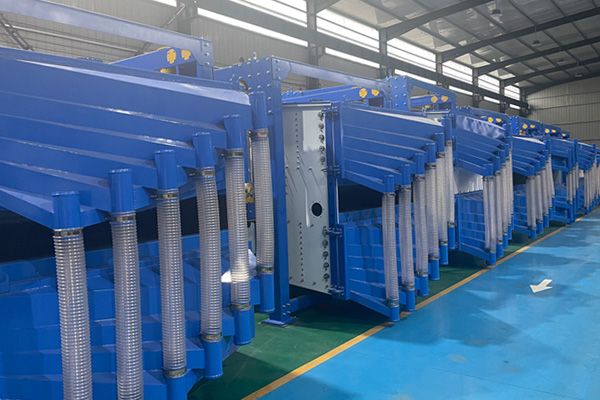
The true price tag of a screening machine isn't on the purchase contract, but in every day it runs. Cheap equipment saves you money when you buy it, but you'll incur costs everywhere you go; good equipment costs a little more when you buy it, but saves you money every day. The cheap machine saves you money today, but you risk it failing you in the next few years. A square gyratory screen, on the other hand, offers stable production lines, peace of mind for workers, and customer satisfaction.
Clearly separated particles, intelligent screening – Mirant Xinxiang Machinery Equipment Co., Ltd.