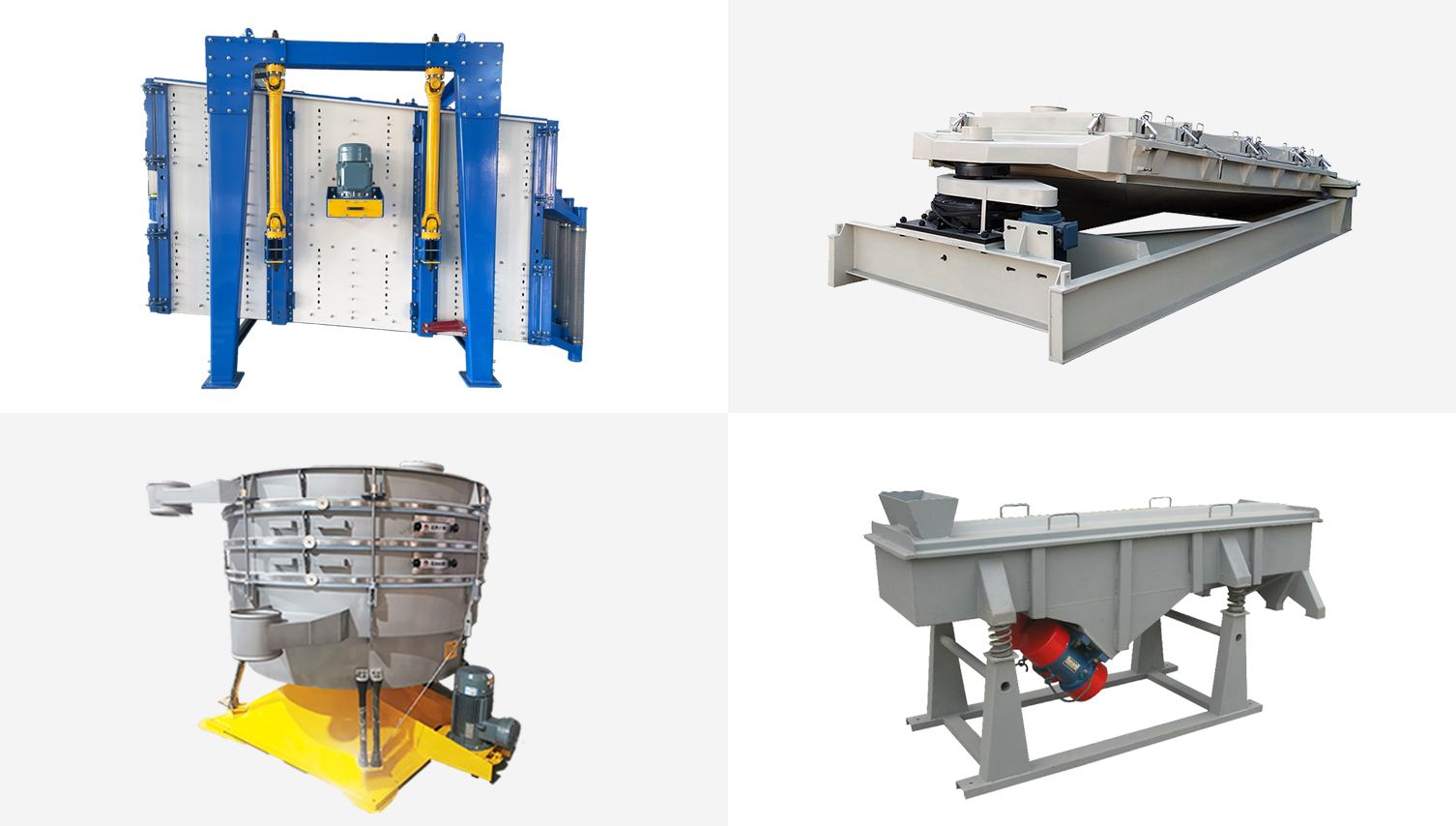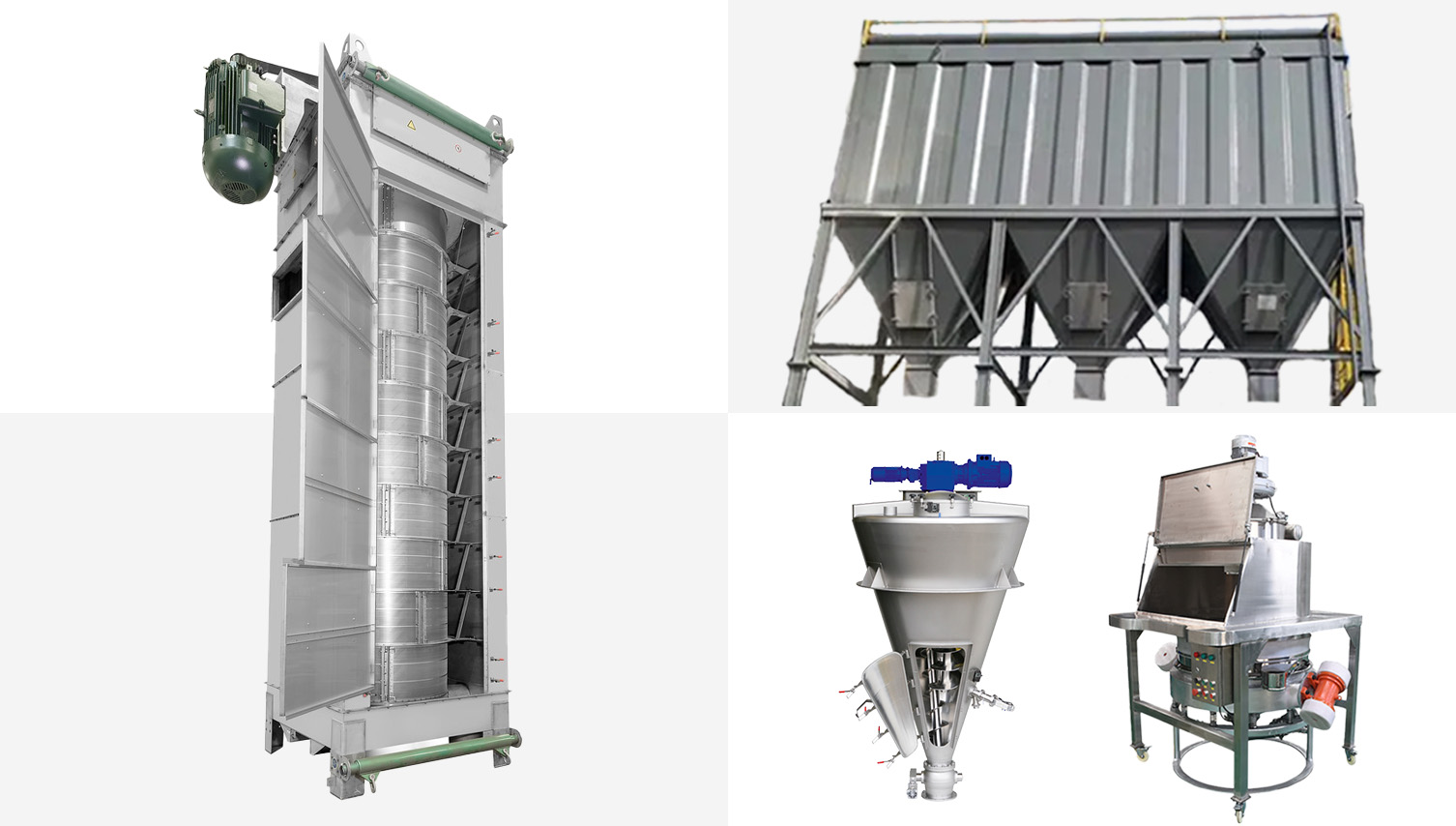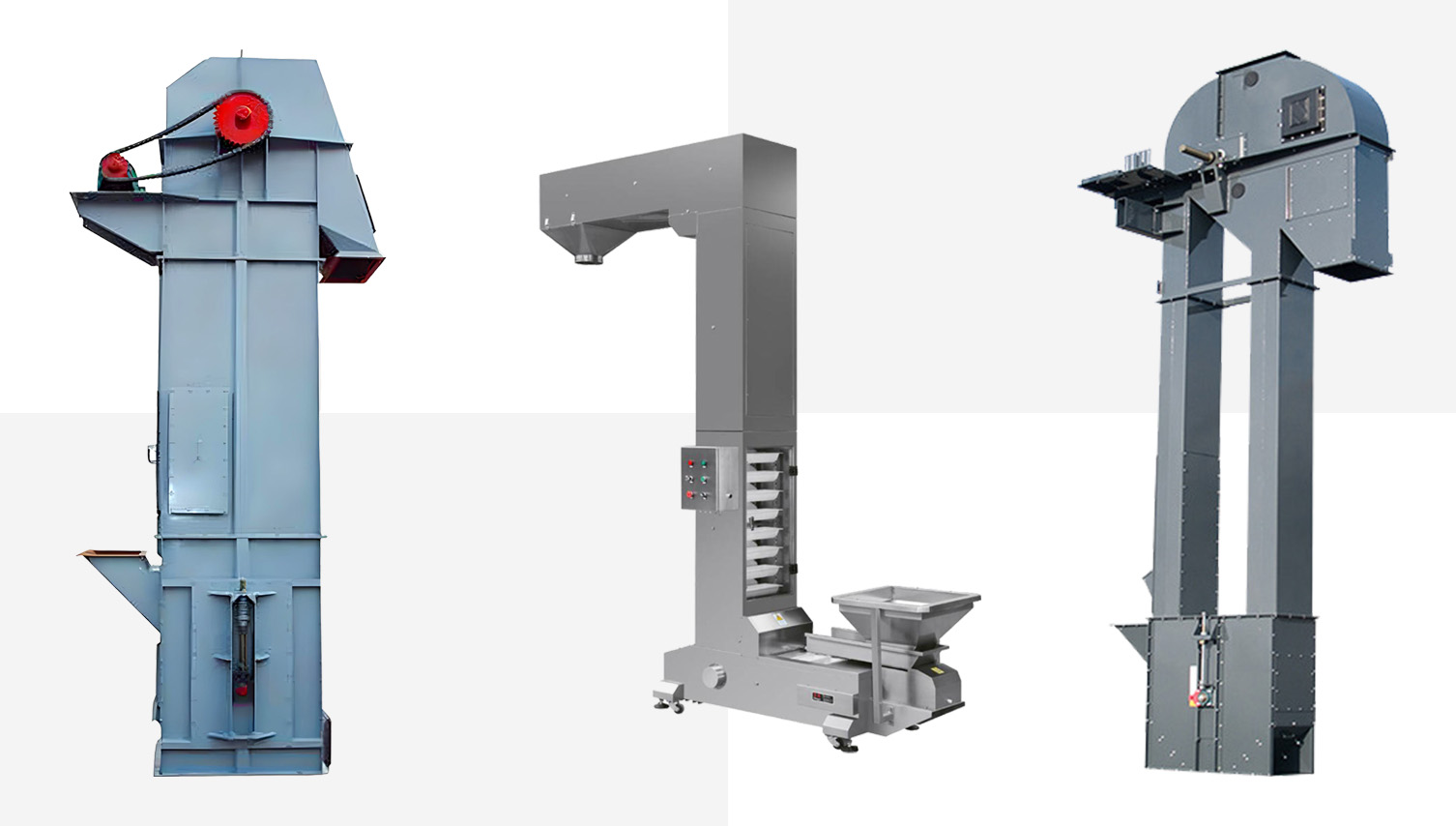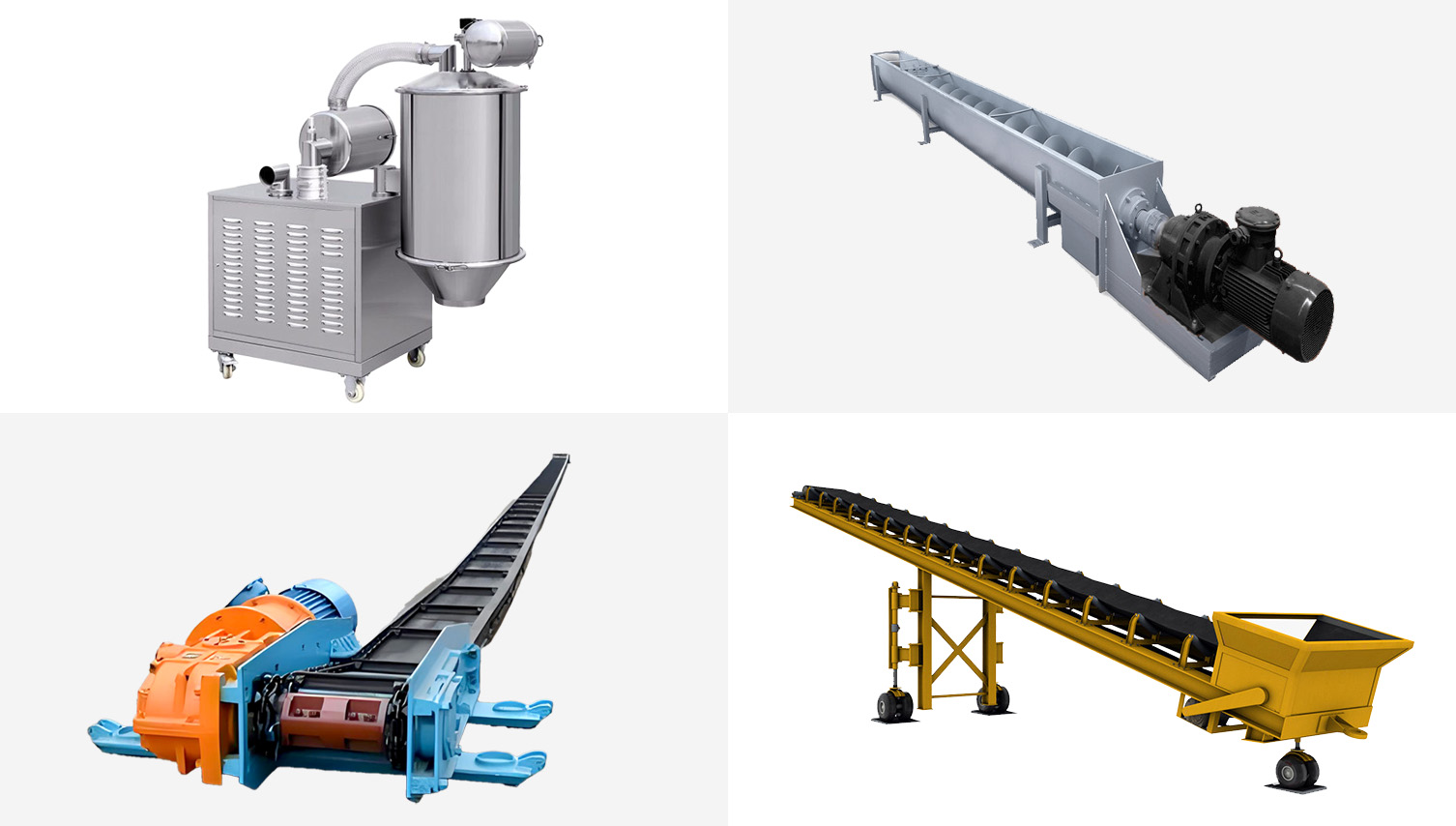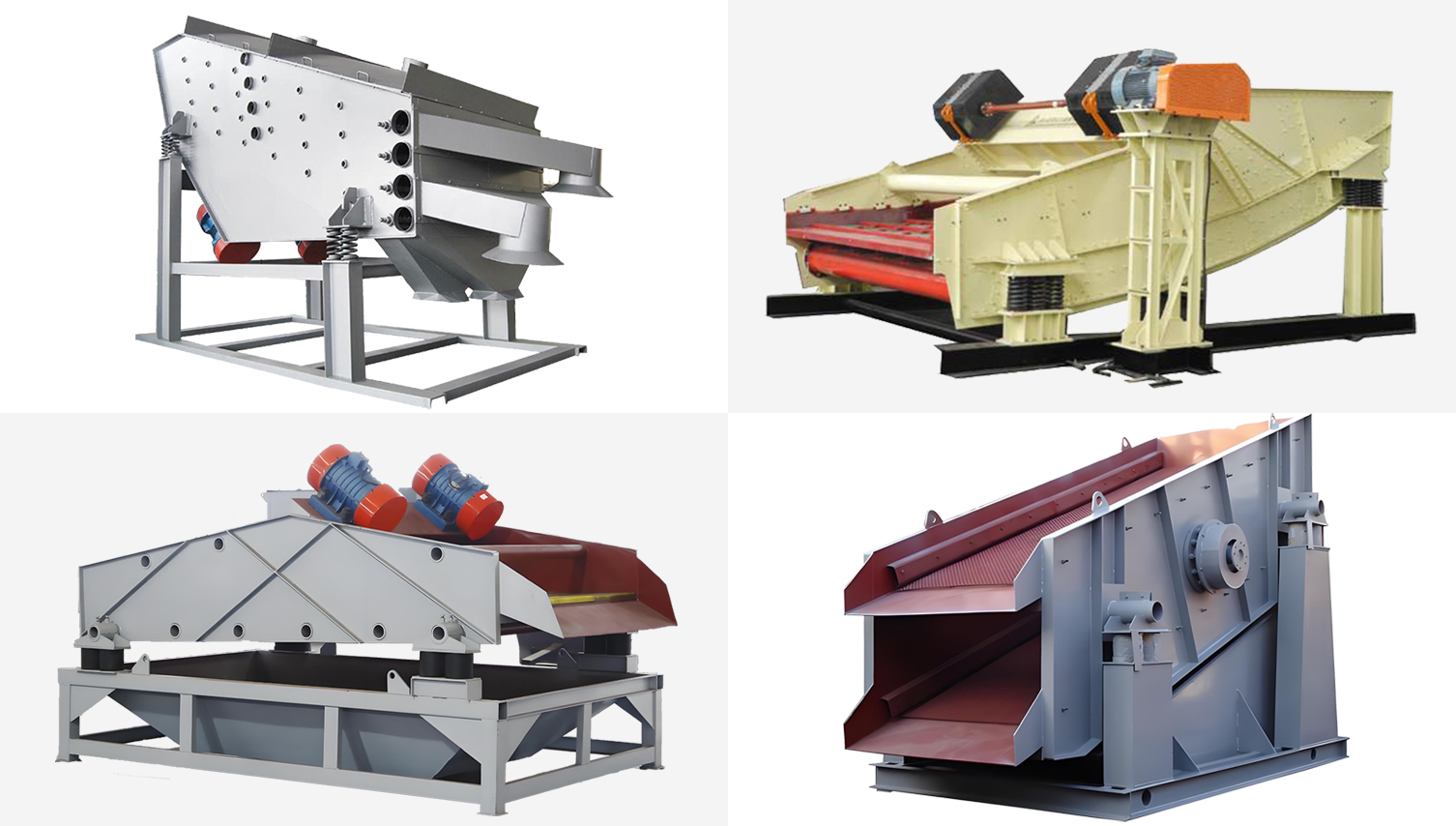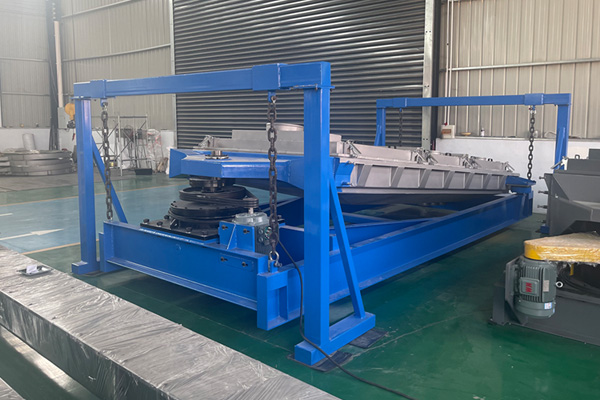
The challenges of modern production lines lie not only in large throughput but also in the complexity of materials. The same equipment might handle dry, coarse materials one day and moist, fine powder the next; it must meet both the capacity requirements of coarse screening and the precision grading of fine screening. Traditional rigid vibrating screening equipment often falls short in the face of these changing demands. The composite screen (also known as a planar rotary screen), with its superior process adaptability, perfectly embodies the concept of "flexible screening."
Wide Adaptability Underpinned by Principle
The powerful adaptability of the composite screen stems from its adjustable motion parameters and modular structural design.
1. Adjusting the Motion Trajectory for Different Materials: The composite screen does not have only one fixed trajectory. By adjusting the angle of the counterweights or changing the drive module, the equipment can switch between pure circular motion, elliptical motion, and linear motion.
- Large Circular Motion (Suitable for Coarse Screening): When the throughput is large and the material layer is thick, a larger rotation diameter can enhance the lateral dispersion of the material, quickly forming a thin layer and increasing the throughput per unit area.
- Elliptical/Linear Motion (Suitable for Precision Classification):When high-precision classification is required or when processing easily clogged materials, a linear reciprocating component can be introduced to enhance the "kneading" effect of the material on the screen surface, improving the screening rate of fine powder.
2. High-Efficiency Combination of Multi-Layer Screens:** Composite screens are typically designed as multi-layer screen boxes. A complete classification process from coarse to fine can be completed within a single device. Because the screening process is gentle, material breaks down almost completely during transfer between screen layers, ensuring clear boundaries and high purity of each particle size in the finished product. This "one-for-many" capability greatly simplifies the production line layout and reduces energy consumption and losses in the conveying process.
3. Accommodation for Materials with Different Physical Properties:
- For Lightweight Materials: Traditional vibrating screens, due to their intense vibration, easily scatter lightweight materials, making it difficult to form an effective material layer. The horizontal motion of the composite screen allows lightweight materials to adhere stably to the screen surface, achieving effective classification.
- For sticky and wet materials: As mentioned above, its self-cleaning ability and horizontal shear force effectively address stickiness challenges.
- For highly abrasive materials: Because the wear between the material and the screen/screen box is sliding friction rather than impact, the wear is more uniform, and the equipment life can be significantly extended by using wear-resistant liners.
The Value of Upgrading
Replacing traditional vibrating screens with composite screens on a production line means the production line gains an "adaptive" capability. Companies no longer need to frequently change equipment or adjust process routes to handle different types of materials. A single planar rotary screen, with its flexible motion parameter adjustments and modular design, is sufficient to handle a wide range of tasks, from coarse particle classification to fine screening.
This high degree of process flexibility gives the production line stronger resilience and broader market adaptability. In today's rapidly changing market, having such a "flexible" core screening device is undoubtedly a powerful guarantee for companies to maintain production flexibility and respond quickly to market changes. Composite screens are redefining the "multi-functional" standard of screening equipment with their unique advantages.
Clearly Separated Particles, Intelligent Screening -- Mirant Xinxiang Machinery Equipment Co., Ltd.