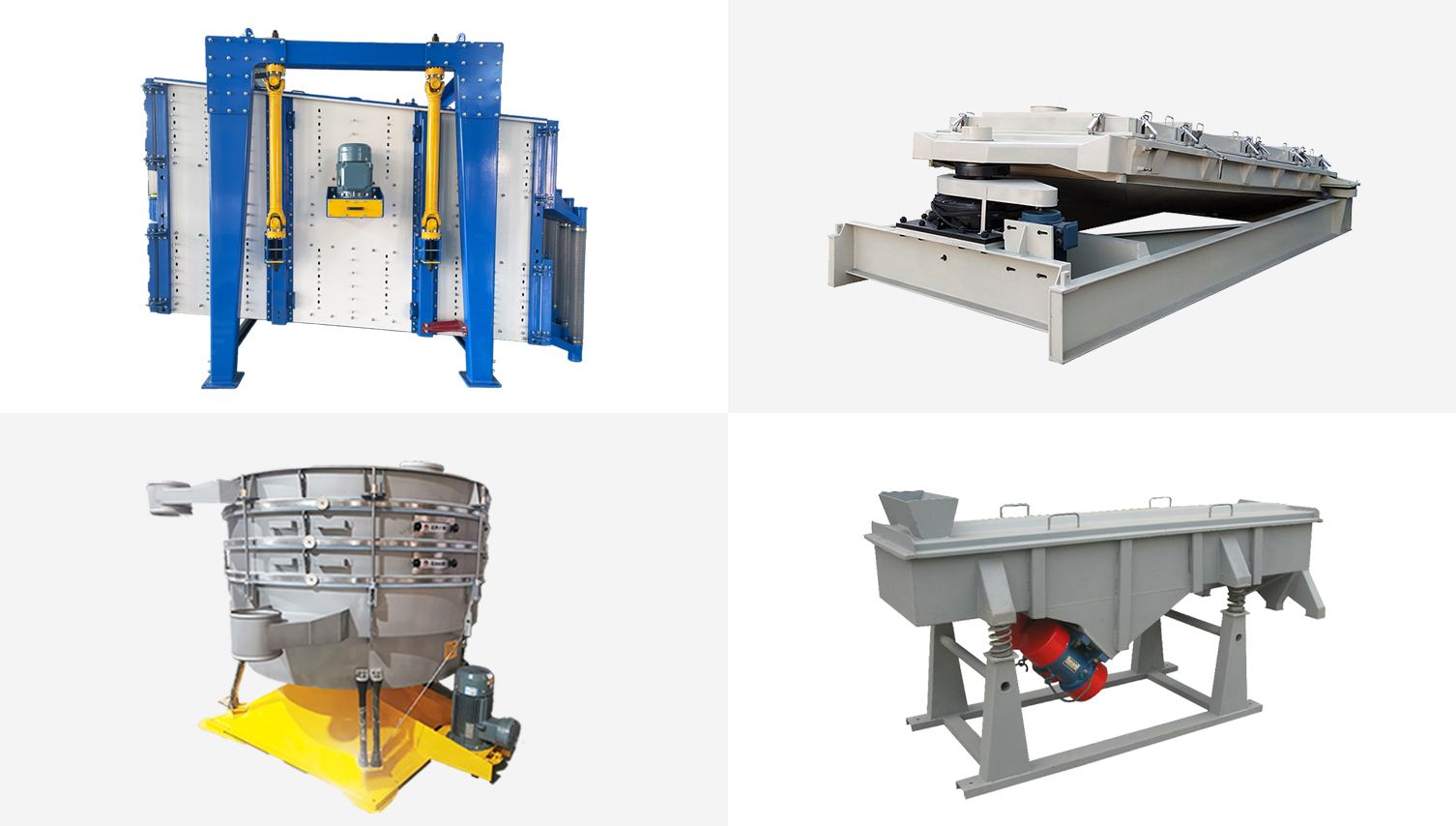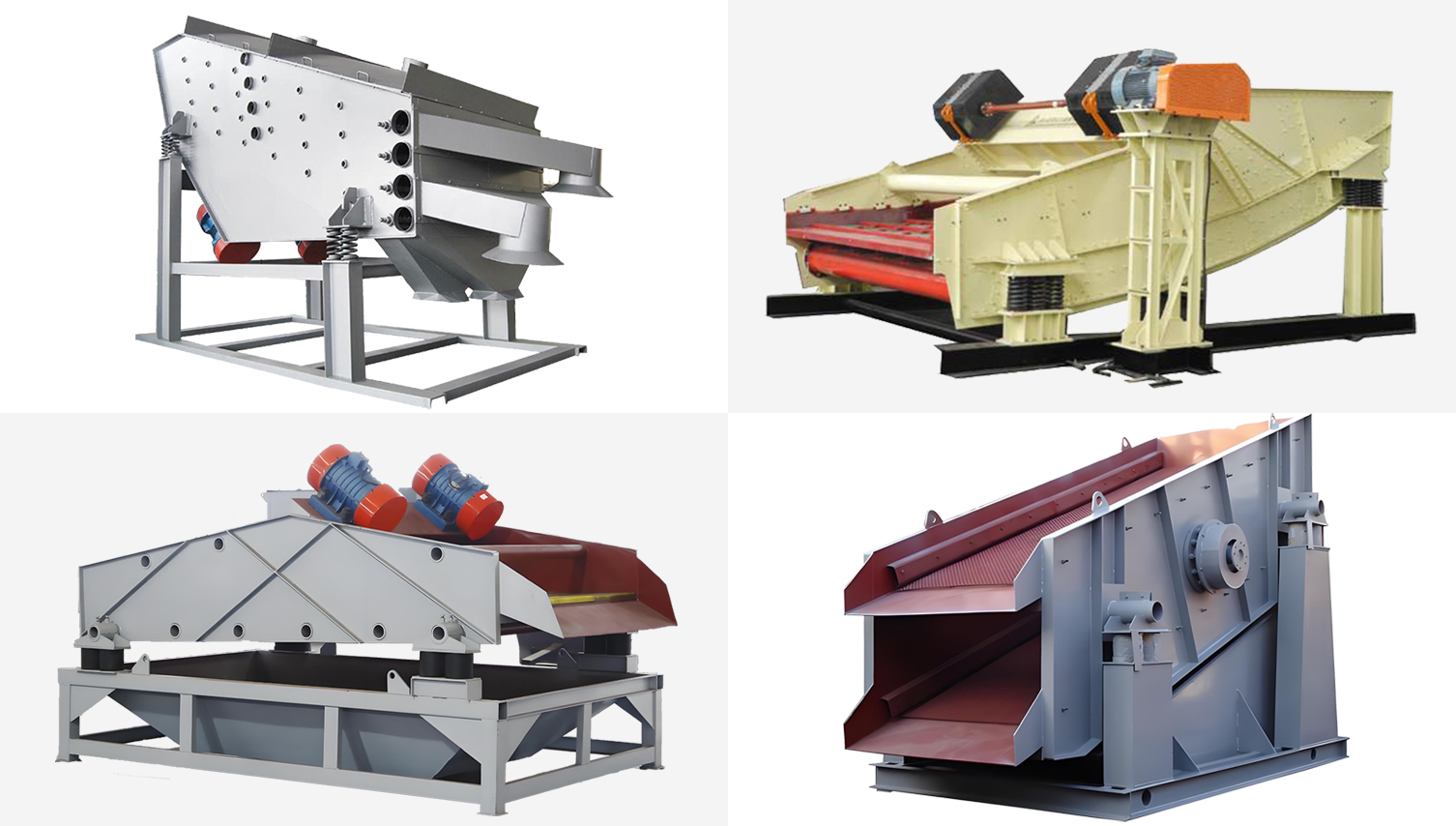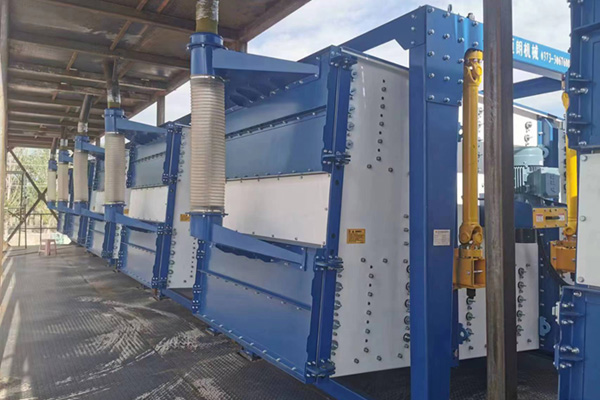
When processing materials with high moisture content, high viscosity, or containing liquid components, screen clogging is often not a mechanical problem of the square gyratory screen, but rather caused by improper process conditions. Water film tension causes fine powder to adhere to the screen wires, gradually leading to a "screen clogging" phenomenon. In this case, simply cleaning the square gyratory screen is insufficient; breakthroughs must be sought in material pretreatment and feeding strategies.
Detailed Measures:
1. Forced Moisture Control Pretreatment:
- For naturally moist materials (such as sand, gravel, mineral powder, and organic fertilizer), add a drying or air-drying process before screening to control surface free water below 5% (the specific threshold depends on the material properties).
- If drying is not possible, add 0.5%-2% of a dry powder anti-caking agent (such as quicklime, talc, or diatomaceous earth) to absorb surface moisture through physical mixing, reducing adhesion.
2. Optimize Feed Uniformity and Flow Rate:
- Clogging is often caused by localized overload. A star-shaped discharge valve or vibrating feeder must be installed at the feed inlet of the gyratory screen to ensure that the material is evenly spread across the entire width of the screen surface, with the thickness controlled within 1-3 times the screen aperture size.
- Avoid "impact feeding"—material directly hitting the screen will instantly compact the bottom layer. A buffer plate or guide channel should be installed to allow the material to slide onto the screen surface.
3. Auxiliary drying or heating of the screen surface:
- Install electric heating or a hot air jacket outside the screen box to maintain the screen surface temperature at 50-80℃. Heat can evaporate trace amounts of moisture on the material contact surface, disrupting the continuity of the water film, which is particularly suitable for highly hygroscopic chemical raw materials or food powders.
The root cause of wet material clogging lies in the interface between water and material, rather than a design flaw in the square gyratory screen itself. By pre-drying, adding anti-caking agents, evenly distributing the material, and heating the screen surface when necessary, the contact state between the material and the screen can be completely changed. These process adjustments need to be tested in conjunction with site conditions to find the optimal humidity control range. Once successful, not only is the clogging problem solved, but screening efficiency can often be increased by more than 30%. Remember: for wet, sticky materials, pretreatment is far more valuable than post-treatment cleaning.
Clearly separated particles, intelligent screening – Mirant Xinxiang Machinery Equipment Co., Ltd.