The overall efficiency of a production line often depends not on the fastest-running stage, but on the slowest bottleneck. In many production scenarios, manual feeding and material handling are precisely such an easily overlooked, hidden bottleneck—inconsistent speeds, unreliable stability, and poor integration with automated equipment become key constraints on capacity release. The introduction of vacuum feeders provides an effective solution to remove this bottleneck and activate the entire line's potential.
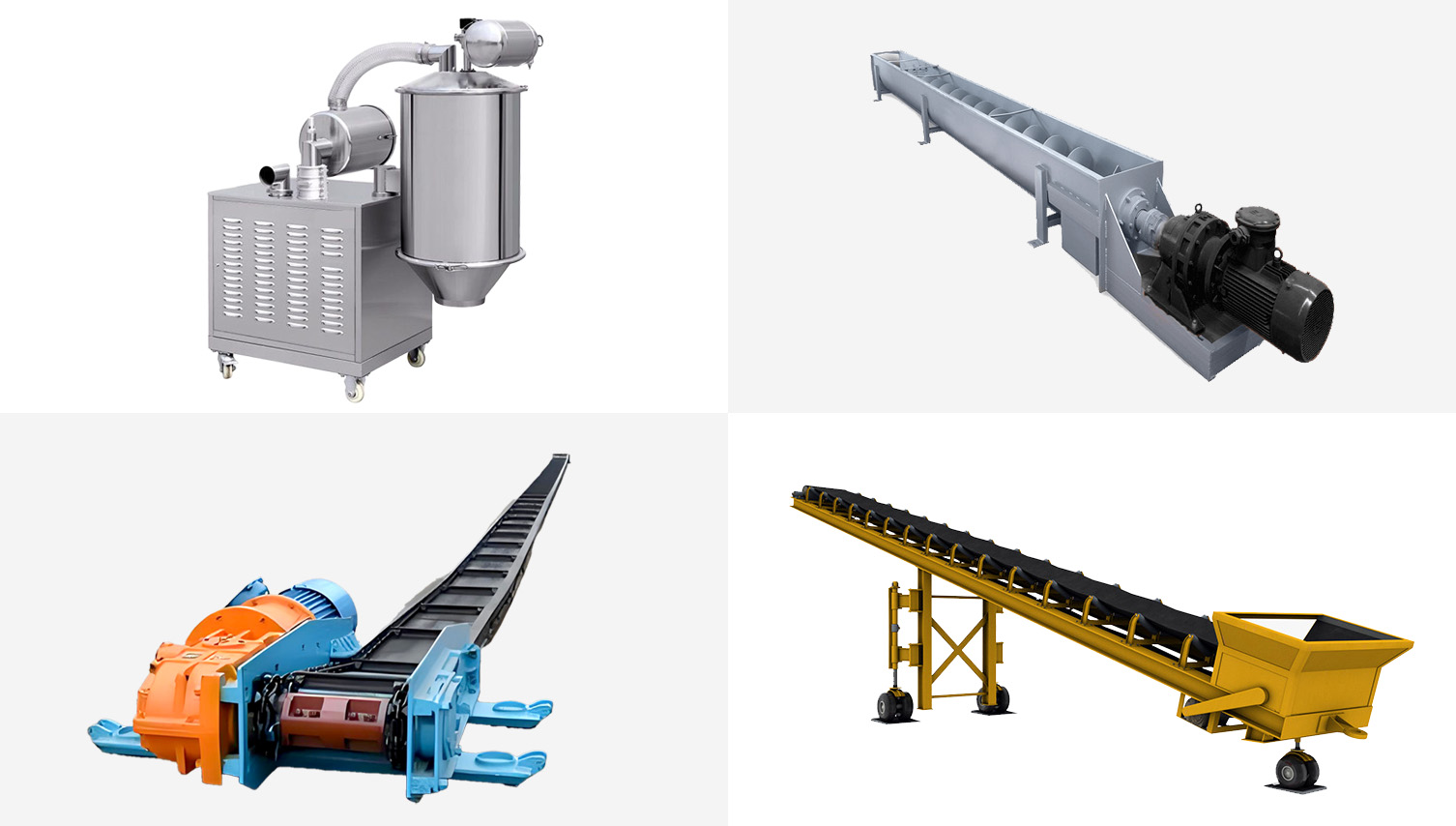
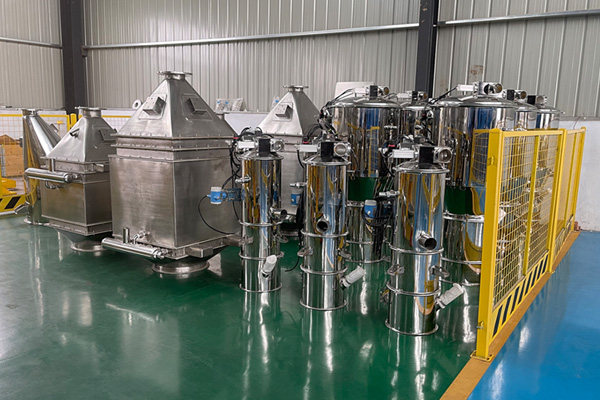
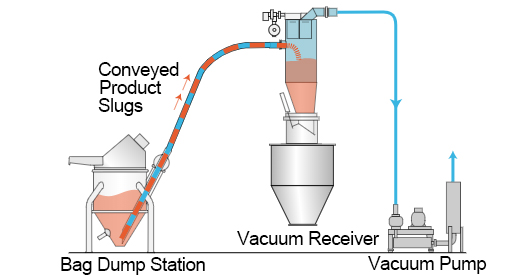
A vacuum feeder is a device that uses the principle of vacuum to add the required materials to production. The machine body is typically made of stainless steel and is equipped with a PLC control system and a vacuum pump or Roots blower. The vacuum pump creates a negative pressure environment within the conveying system. Under this negative pressure, powder materials located in the hopper or other supply source are sucked into the conveying pipeline. The material moves rapidly in the pipeline with the airflow, and after passing through a series of pipelines, it is finally conveyed to the target receiving container or production equipment. After passing through a separation device (bag filter or cyclone separator), the powder is separated from the air. The powder falls into a designated location, while the air is purified before being discharged or recycled. The vacuum feeder completes the conveying of powder materials through the above-described workflow.
I. A Leap in Conveying Efficiency
The most direct change brought about by vacuum conveyors is the significant improvement in conveying efficiency. Traditional manual handling, limited by physical strength and work rhythm, not only struggles to maintain continuous material supply but also wastes considerable time due to frequent back-and-forth trips. Vacuum conveyors, on the other hand, achieve continuous and stable material conveying, with conveying capacity flexibly adjusted according to production needs, completely breaking the constraints of human factors. Materials reach the receiving equipment directly through sealed pipelines, reducing intermediate transfer links to zero. This dual saving of time and space significantly increases production capacity per unit time—creating higher output value with the same equipment and space.
II. Deep Synergy Through Automated Integration
This further amplifies the efficiency-enhancing effect. Vacuum conveyors can achieve intelligent linkage with downstream equipment such as mixers, packaging machines, and reactors: when the receiving equipment sends a material shortage signal, the conveying system immediately and automatically starts replenishing material; it precisely stops when the set material level is reached. This closed-loop control not only ensures a unified rhythm throughout the entire production line but also eliminates the waiting fluctuations caused by manual intervention. Operators are freed from frequent material inspections, allowing them to focus on monitoring and optimizing process parameters, achieving a virtuous cycle of personnel skills and equipment efficiency.
III. Dual Improvement in Changeover Flexibility and Cleaning Efficiency
This provides strong support for multi-variety production models. Faced with the trend of small-batch, multi-order orders, traditional conveying equipment often hinders changeover due to cumbersome cleaning processes. Vacuum feeders employ a quick-disassembly structure, allowing for rapid disassembly and cleaning of components in contact with materials, facilitating the removal of residual materials and significantly reducing cleaning time. This feature significantly improves the overall utilization rate of the equipment, enabling companies to respond to market changes more agilely and achieve a balance between efficiency and flexibility.
Starting by addressing efficiency bottlenecks, vacuum feeders are driving production lines towards greater efficiency, intelligence, and lean manufacturing. It is not merely a conveying device, but a crucial support for companies to unleash their production capacity potential and build flexible manufacturing capabilities.