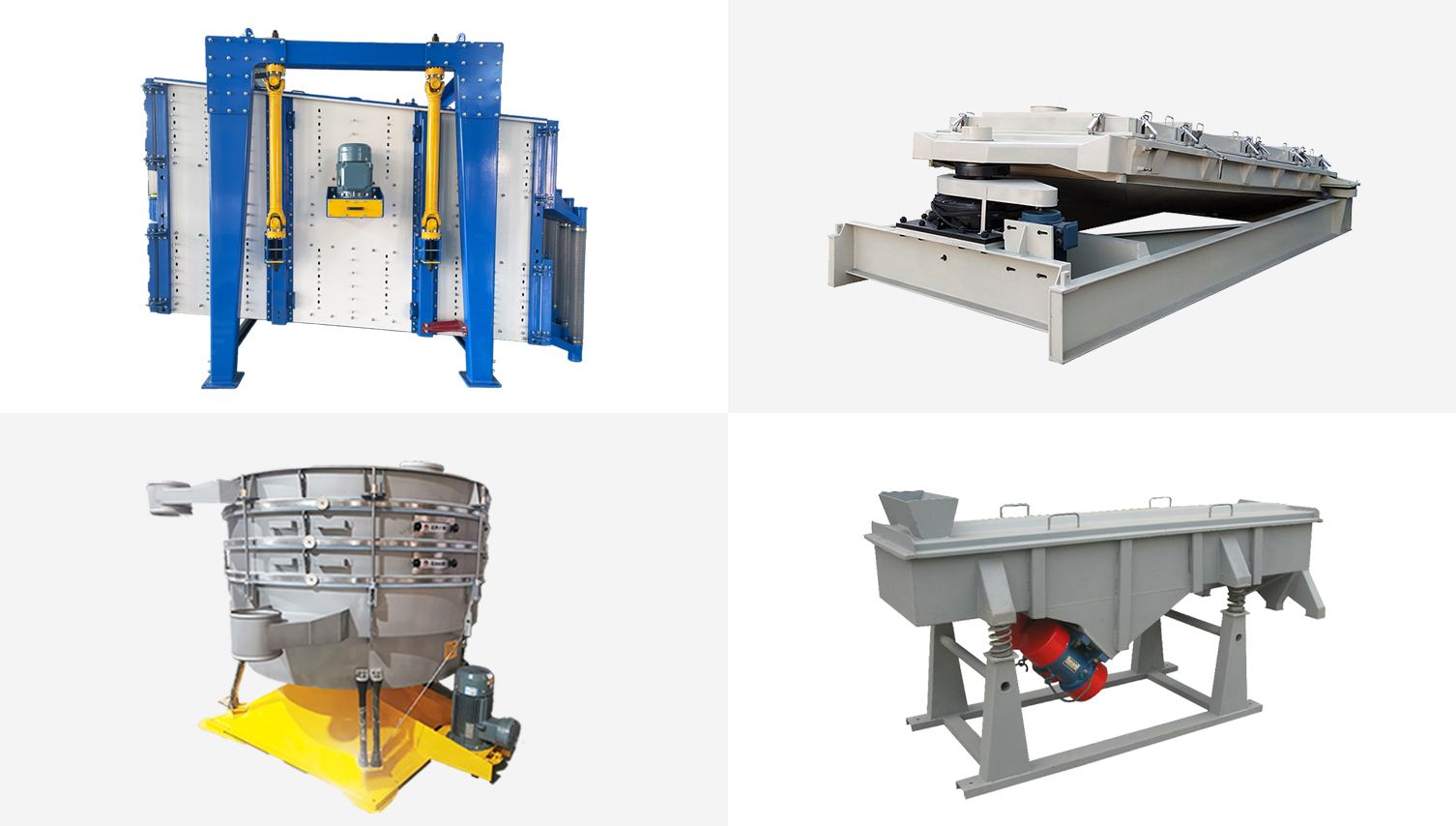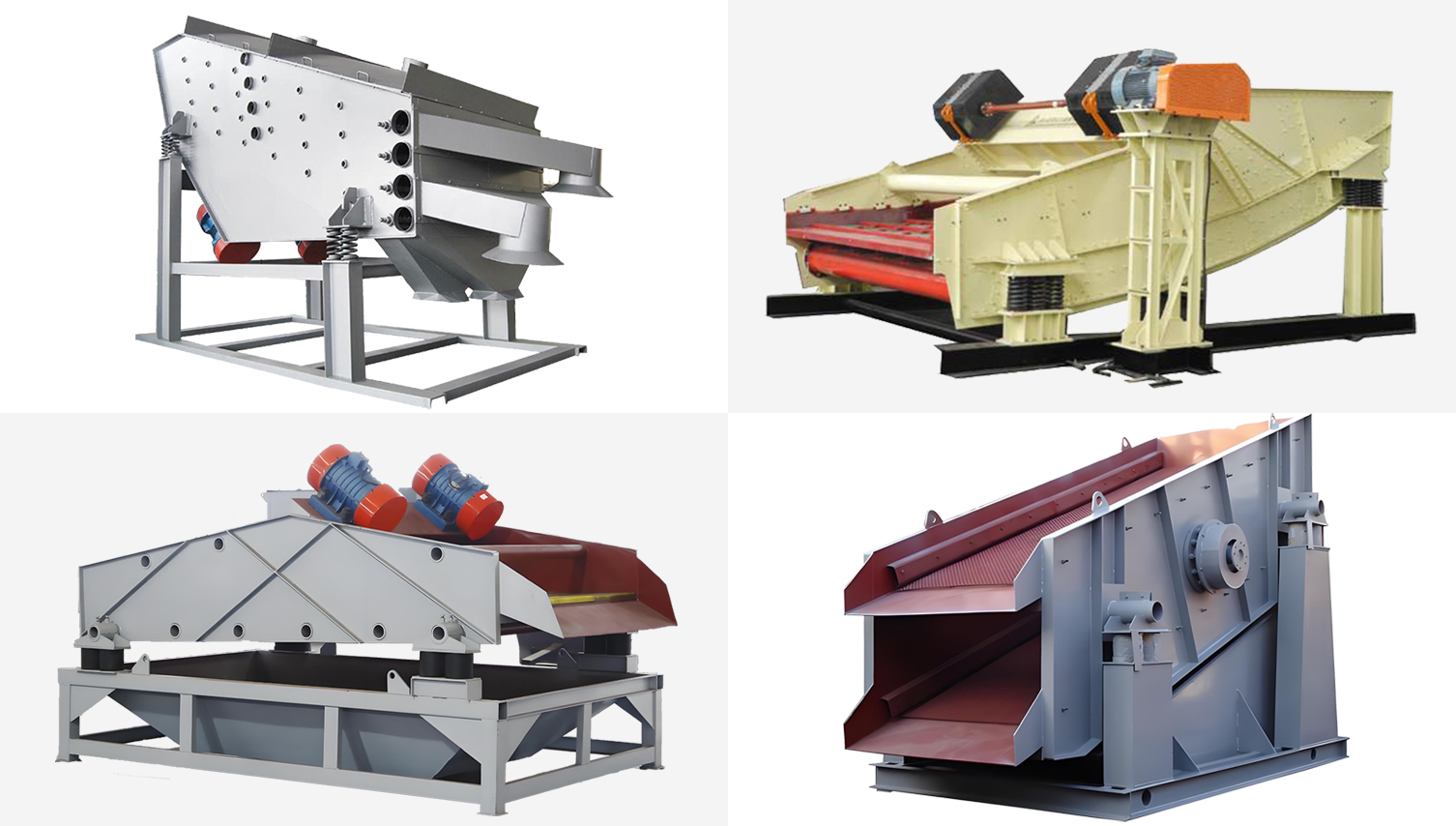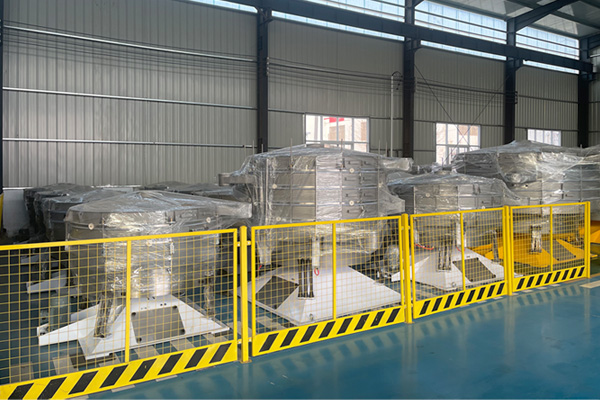
With increasingly stringent requirements for screening accuracy and capacity in modern production, traditional vibrating screening equipment has gradually revealed its limitations. The emergence of the circular gyratory screen marks a shift in screening technology from the high-impact, high-noise "vibration era" to the low-energy, high-precision "gyratory era."
Operating Principle: A Perfect Combination of Bionics and Mechanical Motion
The core operating principle of the tumbler screen lies in its unique bionic design. Instead of relying on traditional motors to directly generate violent vertical or horizontal vibrations, it uses a clever inertial exciter and suspended drive structure to drive the screen box in a three-dimensional "gyratory" motion similar to that of a human hand sieve. This motion is a multi-dimensional combination: on the horizontal plane, the material moves circumferentially in a circular or elliptical shape, quickly covering the entire screen surface and spreading outwards; in the vertical direction, the screen surface experiences slight up-and-down movement, loosening the material layer and creating a "re-stratification" effect. This low-frequency (typically 300-500 rpm), large-amplitude gyratory motion perfectly simulates the fine movements of "spinning, tossing, and shaking" during manual screening. Key advantages of the upgraded system:
1. Balance between ultra-high precision and efficiency: Traditional vibrating screens, under high-frequency vibration, are prone to material "splashing" or clogging of the mesh due to inertia, leading to decreased screening accuracy. The circular gyratory screen, through low-frequency gyration, allows the material to slide and tumble slowly and orderly on the screen surface, increasing the probability of particle penetration and residence time. This allows for a single-layer screening accuracy of over 95%, and it performs particularly well when handling easily clogged, static-prone, or high-viscosity materials.
2. Flexible structure, protecting material integrity: Due to the gentle motion, the breakage rate of material during screening is extremely low. For production lines that prioritize particle integrity, the tumbler screen preserves the original material shape to the greatest extent, reducing the defect rate caused by breakage.
3. Significantly extended screen life: The high-frequency impact of traditional vibrating screens causes severe wear on the screen (especially high-mesh fine screens), often resulting in short screen life and high maintenance costs. The low-frequency oscillating motion of a tumbler screen significantly reduces the instantaneous impact on the screen frame, resulting in more uniform stress on the screen and typically extending its lifespan by 3-5 times.
Upgrading a production line to a circular gyratory screen essentially reshapes the screening process logic—shifting from relying on "impact force" to force materials through to relying on "orderly guidance" to allow materials to naturally return to their proper positions. This upgrade brings not only equipment replacement but also a comprehensive improvement in production stability.
Clearly separated particles, intelligent screening—Mirant Xinxiang Machinery Equipment Co., Ltd.